Airbnb fees vs your own booking site: what direct bookings save
Airbnb and Booking.com both take a cut of every booking they bring you. This guide works through what that cut actually looks like on a real-sized booking, and what the same booking costs when a guest pays through your own website instead.
Most Australian Airbnb hosts pay a 3% host service fee, and their guests pay a separate fee of about 14.1% to 16.5%. Hosts on the host-only fee pay around 15.5% and guests pay nothing extra. Booking.com commission starts from 15%. A card payment on your own booking site costs about 1.65% + $0.30.
What Airbnb and Booking.com actually charge
Most Australian hosts on Airbnb are on what's called the split-fee structure. You, the host, pay a service fee of around 3% of the booking subtotal. Your guest pays a separate service fee of their own, usually somewhere between 14.1% and 16.5% of the subtotal. That guest-side fee doesn't come out of your payout, but it does make the total price your guest sees higher than what lands in your account.
A smaller number of hosts, often with strict cancellation policies or older listings, are on the host-only fee instead. There you pay a single fee of around 15.5% (other hosts on this structure typically see 14% to 16%), and your guest pays nothing extra on top. Which structure applies to your listing isn't something you choose freely, so the figure in your own dashboard is the one that matters, not an average from somewhere else.
Booking.com works differently again. Commission starts from 15% for a standard listing, rises to 18% if you join the Preferred Partner Programme, and you can opt into a Visibility Booster that pushes commission up to 30% in exchange for better placement in search results.
A worked example on a $580 booking
Here's an example booking of $580 for two nights (a made-up figure, just to show the maths) run through each fee structure.
| Booking channel | Fee on this booking | What you keep |
|---|---|---|
| Airbnb, split-fee (most common) | $17.40 (3% host service fee) | $562.60 |
| Airbnb, host-only fee | $89.90 (15.5%) | $490.10 |
| Booking.com, standard commission | $87.00 (15%) | $493.00 |
| Your own booking site (Stripe card payment) | $9.87 (1.65% + $0.30) | $570.13 |
Under the Airbnb host-only fee or a standard Booking.com listing, you're giving up close to $87 to $90 of that booking, roughly 15% either way. Under Airbnb's split-fee, your own cost is much lower at $17.40, though your guest paid more upfront to get there. Either way, a card payment taken on your own site costs under $10.
What a direct booking costs instead
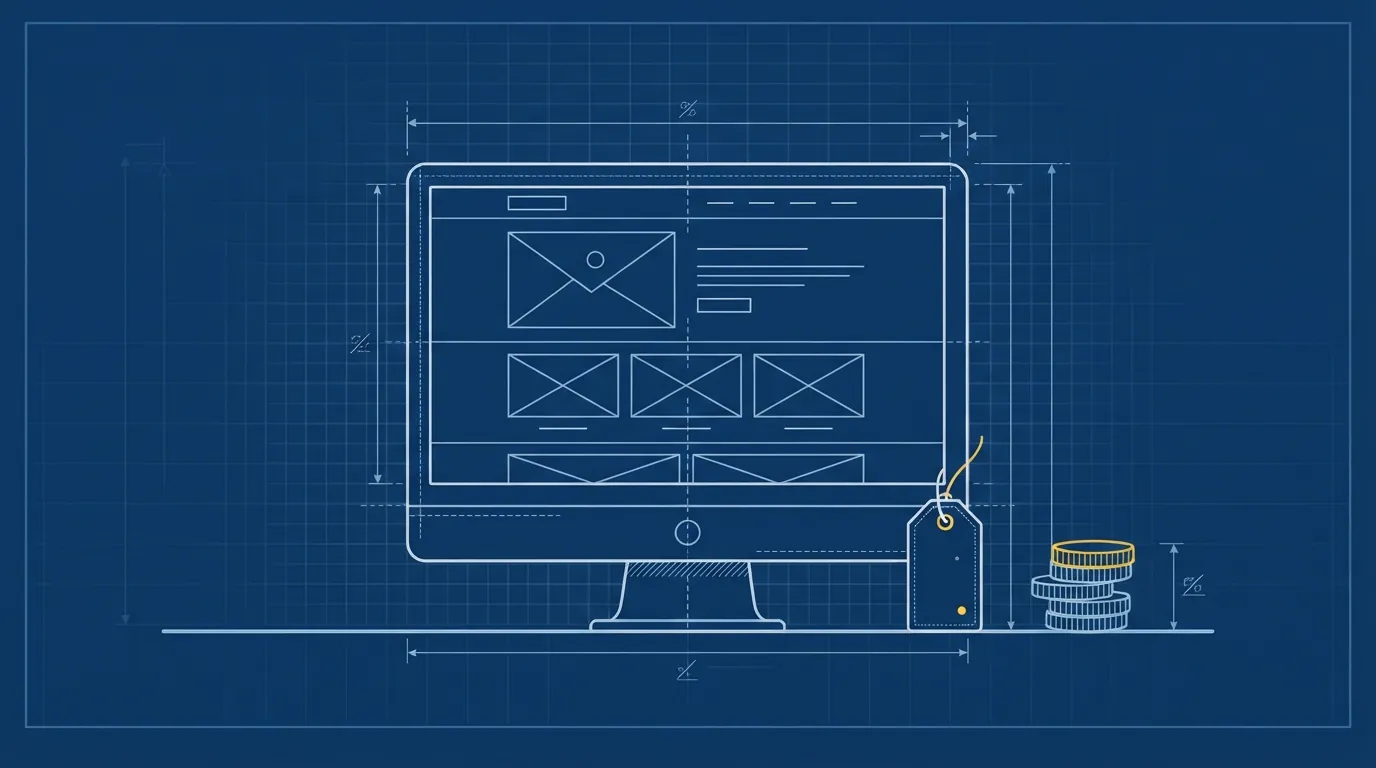
If a guest books and pays through your own website instead of a platform, the only transaction fee is card processing, which for Stripe in Australia is 1.65% plus 30 cents per successful charge. On the same $580 booking that's $9.87, around a tenth of what either platform's standard commission would take.
The other costs are mostly fixed rather than per booking. A .com.au domain costs about $9.95 in the first year on a promotional rate, then renews around $22.95 a year. Basic hosting, if you run it yourself, starts from about $5.50 a month on promotion (normally $11). On top of that there's the one-off cost of building the booking functionality itself. Our quote builder prices online booking functionality from $1,500 plus GST, as a fixed price agreed upfront, not a percentage of every stay you take afterwards.
Not every listing is on the same fee structure, and the GST treatment of the service fee depends on your own situation. The most reliable number is the one in your own payout breakdown, so check that rather than assuming either average applies to you.
What you give up when you skip the platforms
None of this means the platforms are a bad deal. Airbnb and Booking.com put your listing in front of people who are already searching to book somewhere, in a way a brand new website on its own can't match straight away. For a first booking from a guest who has never heard of your property, that reach is worth paying for.
What the platforms don't reward as well is a guest coming back. A returning guest, or someone referred by a happy past guest, has no real reason to hand over 15% or more through a platform if they can just as easily pay you directly. That gap between a new guest and a repeat one is really the whole case for having both channels, rather than picking one over the other.
Why most owners run both
In practice, most holiday rental owners we talk to don't drop Airbnb or Booking.com, they add a direct channel alongside them. New guests still largely come through the platforms. Repeat guests, referrals, and anyone who finds you through Google or your own marketing get a link straight to your own booking page, where the only fee is the card charge.
- Keep your platform listings for guests who don't know you yet
- Send a thank-you message after checkout with a link to your own site, for next time
- Price your direct booking the same as the platform price, or close to it, so the saving is yours rather than a discount war
- Make sure your own site can actually take a deposit and a card payment, not just an enquiry form
A quiet note in a post-stay thank-you message is enough. Most hosts avoid raising it mid-stay, and it's worth keeping an eye on each platform's current rules about contacting guests outside the booking itself.
What this means for your booking mix
A direct booking site doesn't replace Airbnb, it sits next to it and catches the bookings a 15% commission doesn't need to apply to. The build is a fixed price agreed in writing before work starts, not a percentage, and you own the result once it's paid for. Have a look at what a direct booking website for holiday rentals usually includes, or get a price in a couple of minutes for your own property.